
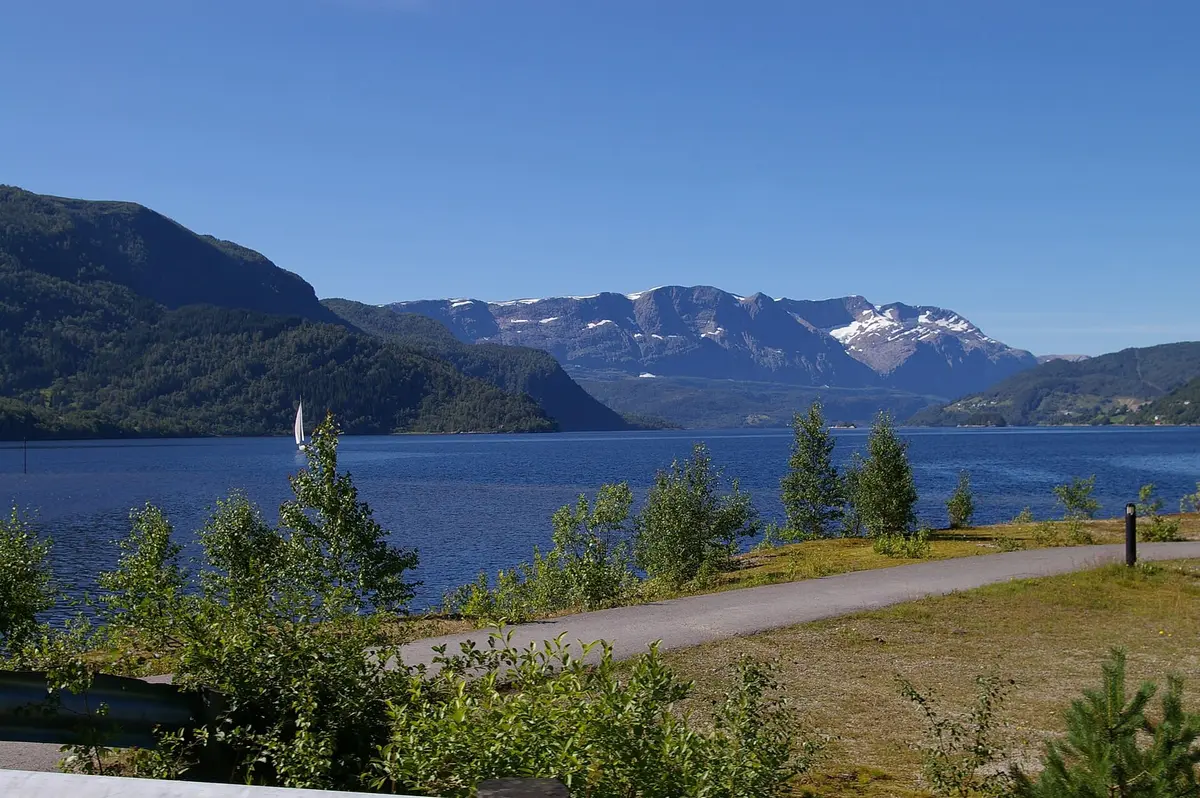
The Engebø mine, which produces an ore containing titanium called rutile, has been at the centre of a showdown between environmentalists and authorities for several years, after the latter gave the mine the green light to dump mining waste in the nearby Førde fjord.
Norway is one of only a few countries in the world where underwater disposal of mining residue is still authorised, along with Turkey, Indonesia and Papua New Guinea.
In June, Norway's Supreme Court ruled invalid the permits allowing up to 170 million tonnes of mining waste to be dumped, via a pipeline, on the Førde fjord seabed.
Environmentalists hailed the ruling as a "victory for nature" and authorities have had to re-examine the issue as a result.
In September, the government approved the dumping of 4.5 million tonnes of mining waste over a three-year period, pending a new review of the case.
Nordic Mining nonetheless announced Monday it was suspending operations "until further notice" due to funding problems.
The cash-strapped group is currently seeking at least $3 million in emergency financing and is also negotiating a financial restructuring.
"In light of the continued uncertainty regarding the outcome of these negotiations and in order to reduce costs and preserve liquidity pending a resolution, ERG (Nordic Mining's operating subsidiary) has decided to temporarily suspend its mining operations at the EngebFørde fjord. project," the company said in a statement.
According to opponents, dumping mining waste underwater releases fine particles and potentially toxic substances that can accumulate in small marine organisms and affect ecosystems.
The Norwegian government has meanwhile stressed the importance of securing European supplies of critical raw materials.
Titanium metal is widely used in the defence, aeronautics and space sectors.
Comments