
Norway has lost King Harald, who served as the country's head of state for 35 years and was one of the most prominent and deeply beloved figures in Norwegian public life.
There are a number of constitutional rules that dictate the events that take place when a monarch dies, and a new sovereign ascends the throne.
READ MORE: Why was King Harald so popular among Norwegians?
What happens now?
As Norway is a constitutional monarchy, His Majesty The King is formally the head of state. The nation is never left without a monarch, meaning that when a sovereign passes away, the next in line in the order of succession automatically becomes king or queen.
Article 6 of the Constitution stipulates the order of succession to the Norwegian throne. The succession is lineal, meaning only a child of a King or Queen, or of a person entitled to succession, may succeed to the throne.
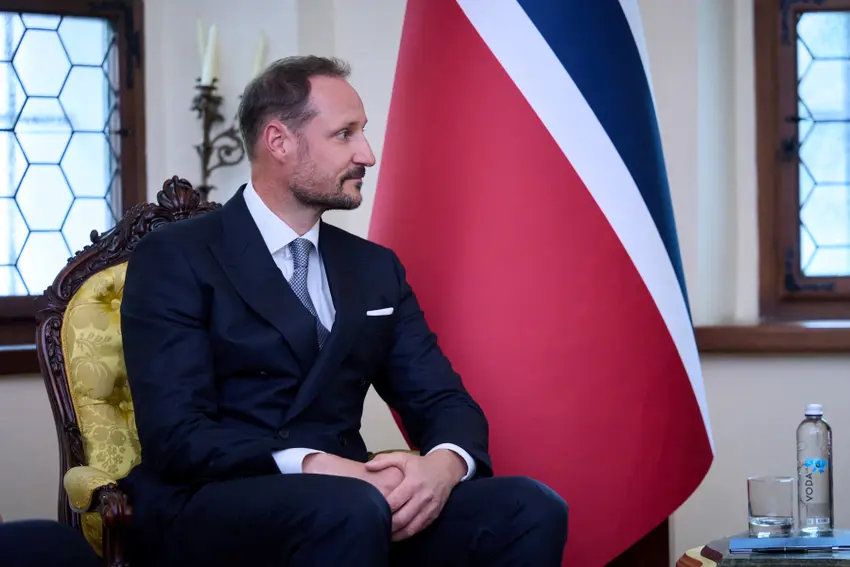
Crown Prince Haakon therefore becomes king immediately. Haakon's 22-year-old daughter Ingrid Alexandra also automatically becomes crown princess.
READ MORE: Modest and measured: Who is Norway's new King Haakon?
Previously, the right of succession was reserved exclusively for male heirs. Since 1990, female and male children have been included on an equal footing. For royal family members born before 1990, male precedence still applies.
Regnal name
Norway's new monarch has chosen the name King Haakon VIII for his reign.
"I will take the name Haakon VIII and will carry on the same motto that my father, grandfather, and great-grandfather chose: 'Alt for Norge' ('All for Norway')," the 53-year-old said in a message published by the government.
"It is my duty to inform the Council of State that my dear father, His Majesty King Harald V, died today, August 28th, 2026 at 06.35am, and that in accordance with the provisions of the Constitution, I have assumed the government as King of Norway", King Haakon VIII said.
Ver esta publicación en Instagram
The constitutional oath
When a monarch dies, the new sovereign must swear an oath of allegiance before Stortinget (the Norwegian parliament), as set out in Article 9 of the Constitution: ‘I promise and swear that I will govern the Kingdom of Norway in accordance with its Constitution and Laws; so help me God, the Almighty and Omniscient.’
Under Article 44 of the Constitution, the heir second in line to the throne who has reached adulthood must provide a written oath before Parliament. As this represents the first time in modern Norwegian history that the second in line is over the age of 18, Crown Princess Ingrid Alexandra will submit her oath in writing to parliament.
Official timeline
The government convenes for an extraordinary government conference at the Prime Minister's Office. The government's website stated that it was scheduled for 10am.
An extraordinary Council of State takes place at the Royal Palace with the new King. At this meeting, the government is formally notified of the monarch's death, and the name and official motto of the new monarch are presented. The extraordinary cabinet meeting was scheduled at 11.30am at the Palace.
After that, the flag over the royal palace will be raised to the top again, while another flag on the royal balcony and at other official buildings will remain at half-mast until after Harald's funeral.
At 12pm, church bells ring across Norway in unison for one hour.
At 12pm, Armed Forces salute stations across nine locations fire mourning salutes (consisting of 21 shots at 30-second intervals), while all military branches mark the King's passing with a formal parade, official announcement, and a minute of silence.
At 6.30 pm, King Harald's coffin will be transported from the chapel at Rikshospitalet to the Royal Palace.
As stated on the Royal Court's website, the cortege will follow a route along Klaus Torgårds vei, Ring 3, Sognsveien, Kirkeveien, Bogstadveien, Hegdehaugsveien, and Parkveien. King Haakon VIII, Queen Mette-Marit, Crown Princess Ingrid Alexandra, Queen Sonja, Prince Sverre Magnus, and Princess Märtha Louise will accompany the coffin.
Funeral
The King's funeral will be a state funeral. This is the highest public and ceremonial honour.
Full details have not yet been made public. The Royal Court is expected to announce the time and date of the official funeral later on Friday.
The ceremony will likely include a church service, a procession, and full military honours.
READ MORE: What Norway's period of national mourning means for daily life
Comments