
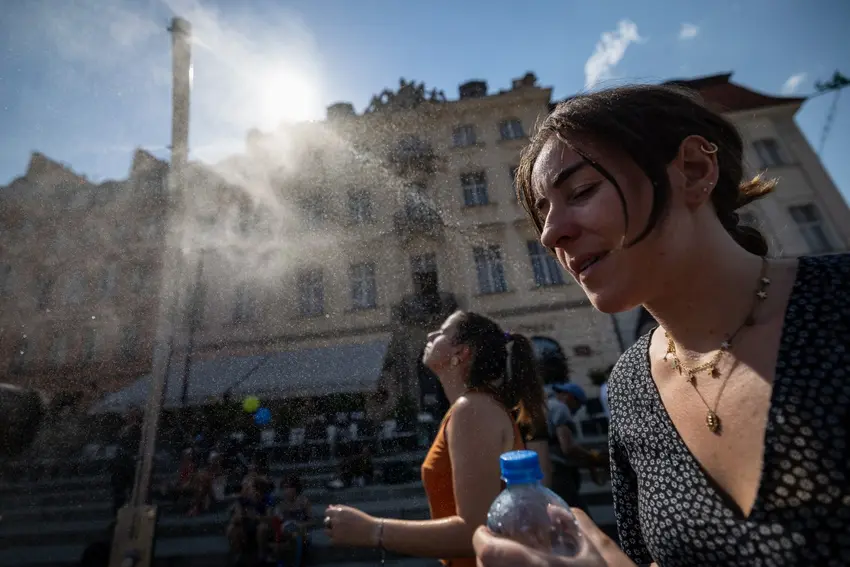
Several heatwaves have hit Europe so far this summer, breaking records in the process.
More than two-thirds of Europeans endured temperatures topping 35C during the June 15th-30th heatwave, according to an AFP analysis, and western Europe experienced its hottest June-July period on record.
Scientists have shown that recurring heatwaves are a clear marker of global warming, primarily caused by burning coal, oil and gas -- and warn they are set to become more frequent, longer and more intense.
READ ALSO: One for the history books - What we know about the European heatwave
Temperatures topping 40C have long been the case in traditionally sunny destinations of southern Europe - Spain, Italy, southern France - but now it's increasingly common in other countries not known for heatwaves: Austria, for example, recently recorded its highest temperature ever, with 41C registered in Vienna.
Even the 'hot' countries are breaking temperature records, and early summer heatwaves in France, Spain and Italy have led to increases in the excess death tolls, as well as heat-related problems like droughts and wildfires.
The Local recently covered the idea of 'coolcations' - the new trend of travelling north (think Sweden, or Scotland, or somewhere else with mild summer temperatures) during the hotter months.
But with average summer temperatures creeping up across Europe, perhaps now The Local's readers in northern Europe could use some tips from those in the south of the continent.
Here's a collection of advice and tips from our coverage in hotter countries putting together a combination of government advice and age-old tips passed on over the years.
We're going to take it as read that you know to drink plenty of water and stay hydrated in hot weather . . .
READ ALSO: Will heatwaves push European holidaymakers to 'coolcations'?
Spain
Spain, which just had its hottest month on record in July, has long been home to many heatwave management tips.
Spray water on curtains and bedsheets - While you don’t really want to go to bed soaked, lightly spraying your bed and your curtains with a fine mist can help.
The idea behind this is similar to the one above in that through evaporation, it helps cool the room down faster.
Put your bedlinen in the freezer for a while - You’re probably using your freezer a lot more in the summer, to store and make ice, ice-creams, lollies and to keep drinks cool, but have you considered cooling down your sheets to help you sleep better?
You should typically leave them in for around 10-15 minutes. The freezing process removes heat from the fabric and provides a cool refreshing surface to lie down on. Be aware though, the sheets will turn to normal temperature within 15 to 20 minutes, but it might help you drift off to sleep at the start of the night.
Read the full breakdown of our sleeping in a Spanish heatwave tips below
READ ALSO: Twelve Spanish tricks to sleep better during a heatwave
Switch off lights- Of course most people sleep with the lights out anyway, but if you can turn them off well before you go to bed in your room, it can in fact lower the temperature by a couple of degrees. Every little helps when you’re trying to sleep in extreme heat right?
Wear loose clothing - However you choose to sleep in a heatwave, make sure you’re not wearing tight clothing that clings to your body. You want loose fitting garments that allow airflow to pass between them and your skin, which can speed up sweat evaporation and help keep you cooler.
Put an ice bucket in front of a fan - If you don’t have air-conditioning you can try creating your own DIY version by putting a bowl of ice in front of a fan to blow cooler air onto you.
This method works better in southern or central Spain where the heat is dryer. In more humid places such as along the Mediterranean coast, it can make the room feel stickier and may in fact make the situation worse.
If the summer heat is making you lose your appetite, the delicious Spanish food and drink specialties linked below will help fill you up whilst keeping you cool.
READ ALSO: The best Spanish food and drink to keep you cool during the summer heat
Italy
The Italian health ministry every year publishes a list of guidelines to keep cool and stay safe during a heatwave. These include tips on what to eat, how to dress and how to keep your place cool in the hottest hours of the day.
Read the full breakdown via the link below.
READ ALSO: 'Choose pasta or fish': Italy's official advice for keeping cool in a heatwave
If you just can’t endure scorching-hot temperatures and are looking for a way to flee the intense heat, the diversity of Italy's landscape means that you’ll find no shortage of ‘coolcation’ spots to choose from.
READ ALSO: Five articles to help you survive Italy’s heatwave
Of the ministry's advice, here's the best of the rest.
Spend the afternoon indoors - The health ministry's website advises staying inside between 11am to 6pm, when the sun is at its most intense.
While it's tempting when you're travelling to try and make the most of every minute, be sensible with your schedule: plan to hit museums, shops, restaurants or other indoor attractions in the afternoon and save outdoor sights for the early morning or evening, especially if they involve a lot of walking or don't offer shade – Pompeii, we're looking at you.
There is a reason that a post-lunch siesta remains popular in much of the country, at least in the summer months.
Eat light - Of course you've come to Italy to eat. But try not to overdo it on hot days, and don't even think of tackling a full antipasto-primo-secondo at lunch.
Italy's health ministry offers several pieces of food-focused advice, including to "moderate our consumption of dishes high in fat and reduce condiments."
The ministry also reminds us to "consume five portions of fruit and seasonal vegetables per day," and to generally "favour fresh produce that is easily digestible and rich in water."
READ ALSO: The Italian summer habits all foreigners should adopt
Take care in the car - Check the traffic report before setting off to see whether you're likely to be stuck in gridlock under the full sun.
Avoid driving during the heat of the day unless your vehicle has air conditioning, and make sure you carry extra water for the journey.
Never leave anyone, human or animal, in a car parked in the sun. When you're returning to a hot parked car, air it out or put on the air conditioning before setting off, and check that child seats aren't too hot to sit in.
Gelato for lunch? - In slightly more left-field advice, one of the ministry's official recommendations is to substitute lunch with a gelato.
"Consuming an ice cream or a milkshake can be an alternative to a midday meal," the guide suggests – just remember to factor it into your daily nutritional intake.
It also urges people to "be imaginative when preparing dishes" and "respect the correct number and timing of meals, without skipping breakfast".
| Banner ad |
France
The French government also offers advice to citizens on how to survive heatwaves.
READ ALSO: Light meals and shutters - The French government advice for surviving a heatwave
Avoid alcohol - In what seems surprisingly un-French advice, they say to avoid alcohol.
On a scorching day sometimes only the thought of an ice-cold pint gets you through, but the French government recommends avoiding alcohol. It will dehydrate you, so maybe at least drink in moderation if you can't resist a cheeky chilled rosé on a summer evening.
There are some great bière sans alcool (alcohol free beer) options available in France.
Be aware of the physical symptoms - France's ministry of health also encourages people to be aware of the physical side effects that high temperatures can bring on. These include cramping, fatigue, headaches, fevers, nausea, and incoherent speech.
If you believe that you or someone you know could be experiencing heat stroke - particularly if fainting, incoherent speech or high fever is involved, then you should call the emergency number 15.
Avoid iced drinks- French experts also say to avoid iced drinks.
We all know that drinking plenty of water is vital when it's hot - but although iced water sounds like the most refreshing choice, it might not be as cooling as you think.
Why is it a bad idea? Drinking iced water won't do you any harm, but might cool you down less than un-iced water. The reason for this is that the stomach has temperature sensors, which when confronted with very cold liquids will instruct the body to warm up - which is not what you want.
Paris-based cardiologist Alain Ducardonnet told French TV channel BFM: "The ideal is to drink water at room temperature or a little cooler."
The French Ministry of Health also recommends avoiding sodas and sugary drinks, as well as those with high caffeine content as these have a diuretic effect (they make you pee) and are therefore dehydrating.
READ ALSO: 'Avoid iced water and air-conditioning on max' - How the French stay cool in a heatwave
Comments