
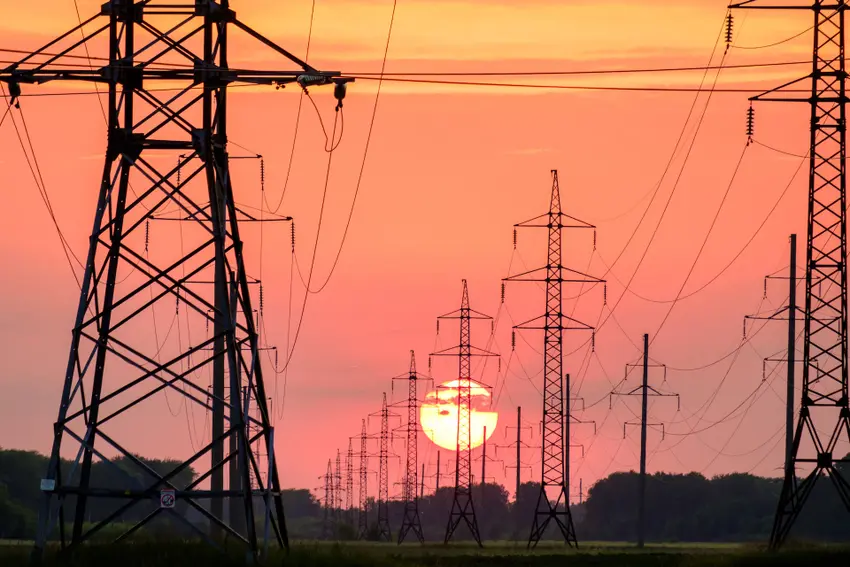
Higher power prices raise cost of Norgespris
Norway's government will need to pay more than expected to maintain the Norgespris fixed price scheme, although as a lot of generation is state-owned, the government's finances should be in the black.
"The expenses for the Norgespris scheme have become significantly greater than the government took into account in the state budget. But when electricity prices increase, large parts of the revenues end up with the state. So the calculation is positive anyway," Bård Vegar Solhjell, head of Renewable Norway, told the NTB newswire.
The state has spent around 9.3 billion kroner on offering fixed-price agreements at the same price in the first three months of this year, subsidising the portion of the electricity price that exceeds 0.40 øre per kilowatt hour.
But over the same period, the state will earn around 13.6 billion kroner from the portion of the electricity price that exceeds 0.40 øre per kilowatt-hour, giving the state a net profit of 4.3 billion kroner.
Confusion about French snus ban – Foreign Ministry with new update
The Ministry of Foreign Affairs has updated its travel guidance to France after confusion over whether it applies to so-called 'white snus' or vit snus sold in Norway.
On April 1st, France introduced a strict ban on so-called nicotine pouches – i.e. white snus without tobacco. In principle, the ban on import or possession does not apply to brown snus made from tobacco.
While tobacco-free snus sold in Sweden contains no tobacco, white snus sold in Norway contains small amounts of tobacco to comply with the Norwegian ban on tobacco-free snus. Nicotine is then added. How the French authorities will react to this snus, which contains very little tobacco, is unclear.
The Ministry of Foreign Affairs has now updated its travel advice to stress that the ban applies to "tobacco-free white snus with nicotine", suggesting that it does not apply to white snus sold in Norway.
Norwegian weapons manufacturer Nammo warns of supply gap
The huge demand for ammunition and missiles, driven largely by the war in Ukraine, is growing faster than the weapons industry can build up capacity, the Norwegian weapons manufacturer Nammo has warned, weakening Norway's ability to maintain stocks.
"We undoubtedly see a gap between needs and production capacity, for example when it comes to air defence missiles," the company's press spokesperson Thorstein Korsvold told ABCNyheter.
"The scaling up of industry's production capacity is clearly slower than the growth in consumption and demand. This is primarily due to the war in Ukraine, the need for Nato countries to replenish their emergency stocks, and the war in Iran, which has now used up a lot of material."
"The challenge is partly that the construction itself takes time, personnel must be hired and trained, there may be bottlenecks in the supply chains, and we see that, for example, some production machines have long delivery times. The most important bottleneck now is about financing."
Lufthansa cancels 20,000 flights due to fuel shortages
The German airline Lufthansa has cancelled 20,000 flights due to fuel shortages caused by the blockage of the straits of Hormuz, including the route between Frankfurt and Stavanger. The route to Trondheim and nine other ruotes, it said in the press release, "would be consolidated...via other hubs".
Frode Steen, professor of economics at the Norwegian School of Economics, said more flights would be cancelled with SAS in particular likely to reduce the number of its flights.
"Some will get by longer without having to do anything, while others have to do something quickly. In Norway, SAS is worse off than Norwegian, because Norwegian has bought much more insurance, while SAS clearly has not," he told NRK.
Comments