

How does Oslo square up to other cities as a place to live in 2025?
The new State of the City 2025 report now places the Norwegian capital as the 31st best city to live in worldwide and 13th in Europe—a leap from where it stood just a few years ago.
The annual report, produced by Oslo Business Region, compares cities across the globe on key measures like economy, talent, quality of life and sustainability. It gives an overview of how Oslo is performing against cities like Stockholm or Copenhagen, and the direction the city is heading in.
Oslo has built a reputation as one of the safest, greenest, and most liveable cities in the world. But it also comes with trade-offs compared to other European hubs.
The appeal of Oslo
If you’re searching for balance, Oslo ranks 9th globally for work–life balance satisfaction.
It’s one of the rare capitals where you can step out of the office and be in the forest or swimming in the fjord within minutes. Trust in institutions is extremely high—rated 4th globally in trustworthiness and 3rd in governance performance—and everyday life reflects that. Public services are reliable, the streets are safe, and the pace feels calmer than in bigger cities.
Families especially appreciate the access to green spaces, the strong focus on children’s well-being, and the overall sense of security.
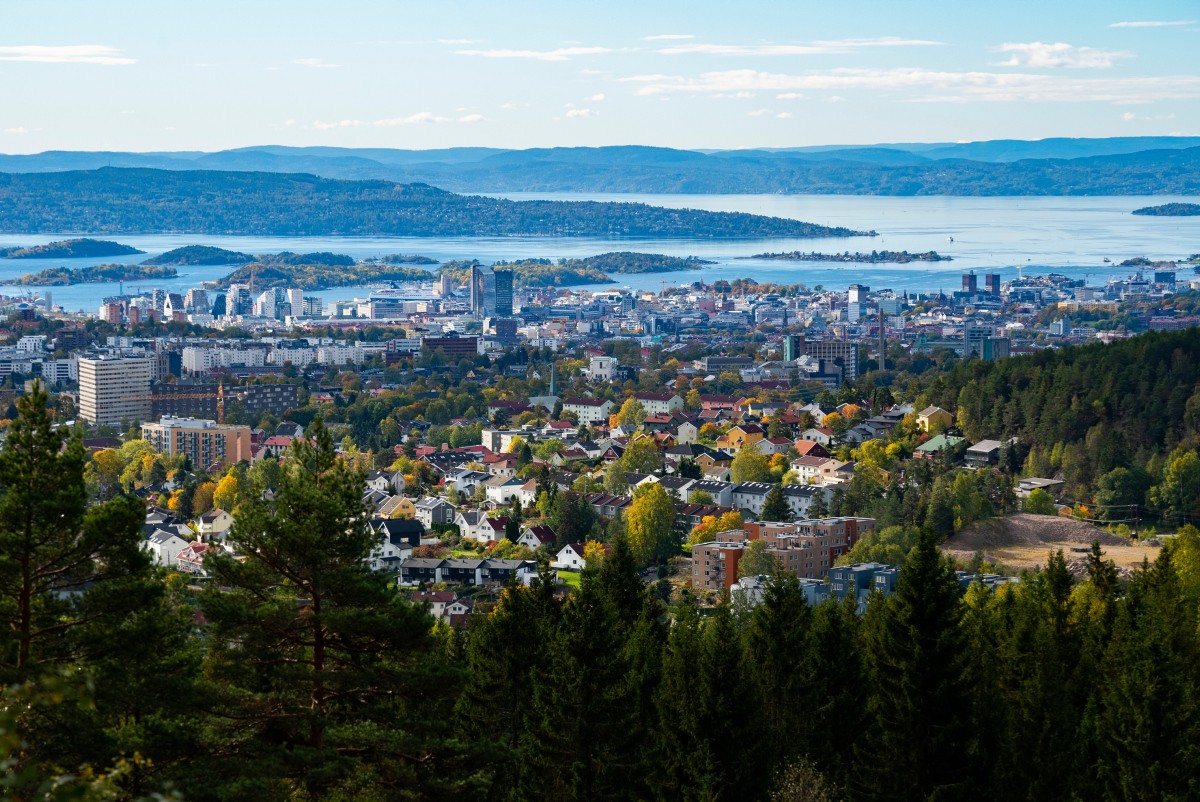
Career-wise, Oslo is no longer the quiet Nordic sibling. Its innovation scene has exploded: venture capital investment has multiplied more than thirteen times in the past decade, and sectors like fintech, life sciences, and the blue-green economy are growing. For entrepreneurs and skilled professionals, the city offers opportunities that simply weren’t there ten years ago. And its green leadership—electric transport, climate policy, sustainable business—has made it a role model that attracts people who want to be part of building the future.
Oslo may not shout as loudly as other capitals, but for those looking for stability and green living, it has become one of Europe’s most attractive places to call home. The quality of life is hard to match, and the mix of urban life and access to nature stands out.
Key numbers
Oslo ranks:
- 3rd out of 59 cities for most walkable city centre (1st: Barcelona)
- 12th out of 50 cities for longest life expectancy (1st: Madrid)
- 6th out of 70 for lowest share of car travel (1st: Hong Kong)
- 16th out of 121 for best air quality (1st: Reykjavik)
- 44th out of 1,095 for walkable access to education and health services (1st: Munich)
Where Oslo lags behind
But moving here also means adjusting to some challenges. Oslo is in the bottom 25 percent for perceived expat life satisfaction. Newcomers often feel the high cost of living, especially when it comes to housing, groceries, dining out, and cultural activities.
“The city is still perceived as prohibitively expensive,” said Dr. Tim Moonen, author of the report and Managing Director of The Business of Cities, during the launch at the National Museum in Oslo. According to the research, Oslo is also among the ten least budget-friendly destinations over the past decade.
Culturally, Oslo is growing but still under the radar.
The city has invested in world-class museums, it is home to 11 Michelin-starred restaurants, and numerous live music venues, yet it doesn’t always register abroad as a cultural capital. If you’re moving from London, Berlin, or Paris, you may find the nightlife and food scene restricted, and some international residents describe it as less “buzzing.”
Another factor to consider is talent depth.
If you’re in a fast-scaling sector, you may find the pool of skilled candidates narrower than in larger hubs like Stockholm or Amsterdam. Universities here are strong locally but don’t yet carry the same global reputation, which can affect both recruitment and networking.
“Oslo consistently rates near the top of charts for its environmental edge, high-quality transport and residents’ well-being, but still has areas to explore, including authenticity and a welcoming feel,” Moonen explained.
The report
The State of the City is an outside-in review of how Oslo compares and competes. It draws on a wider set of 1,000 international city benchmarks and rankings, alongside national and local data sources.
The report looks both at how Oslo is performing and how it is perceived, reviewing how the city has been rated since the start of 2024. First published in 2015, it evaluates Oslo across key themes ranging from economy and talent to sustainability and quality of life.
Comments