

With high season just kicking off, the floating saunas along the harbour promenade—right in the heart of the city centre—will be buzzing all the way until April.
Have you been invited to join a floating sauna session, or are you simply curious to try one of the Scandi-cool urban saunas you’ve seen on social media?
You’re not alone. Many international residents hear about the joys of sauna life—a tradition hailing from Finland—including relaxation, improved blood circulation, a stronger immune system, and a vibrant social atmosphere.
But this is not an ordinary sauna. For those unfamiliar with the concept of heating up in a wooden hut and then cooling down by jumping into Oslo’s icy waters —in your bathing suit, not naked—, the experience can feel intimidating or outside their comfort zone at first.
The good news? Most people end up loving it—and coming back for more.

That was the case for Florian Boyenval, 32, from France. He was invited by a friend when he was new in Oslo, part of a “welcome package” to understand the city vibe.
“I remember I was amazed by the location and how easy it is to access (like booking—you just go, change, and choose the sauna you want). It felt like it matched very well with the vision I had of Norway: easy access to nature and good work-life balance. I also felt like it’s really a cool activity that helps with long winters,” he recalls.
“Just come ready to enjoy the moment, ready to sweat but also to dip in cold water and not fear it—it’s always better than it sounds," he said.
Going with a friend who can show you how it works is often best.
“My first experience was in a sauna next to Sukkerbiten,” says Ansin Lau, 33, from Taiwan.
“My friend invited me to a morning sauna at 6 am. It was quite nice but chilly. My tip for those who want to try it is to complete at least three sauna cycles. A cycle means staying in the sauna for a while, then cooling down with a cold shower or by jumping into the water. Three cycles can really calm you down, help you relax, and make you listen to your body.”
What makes it special: the fjord effect
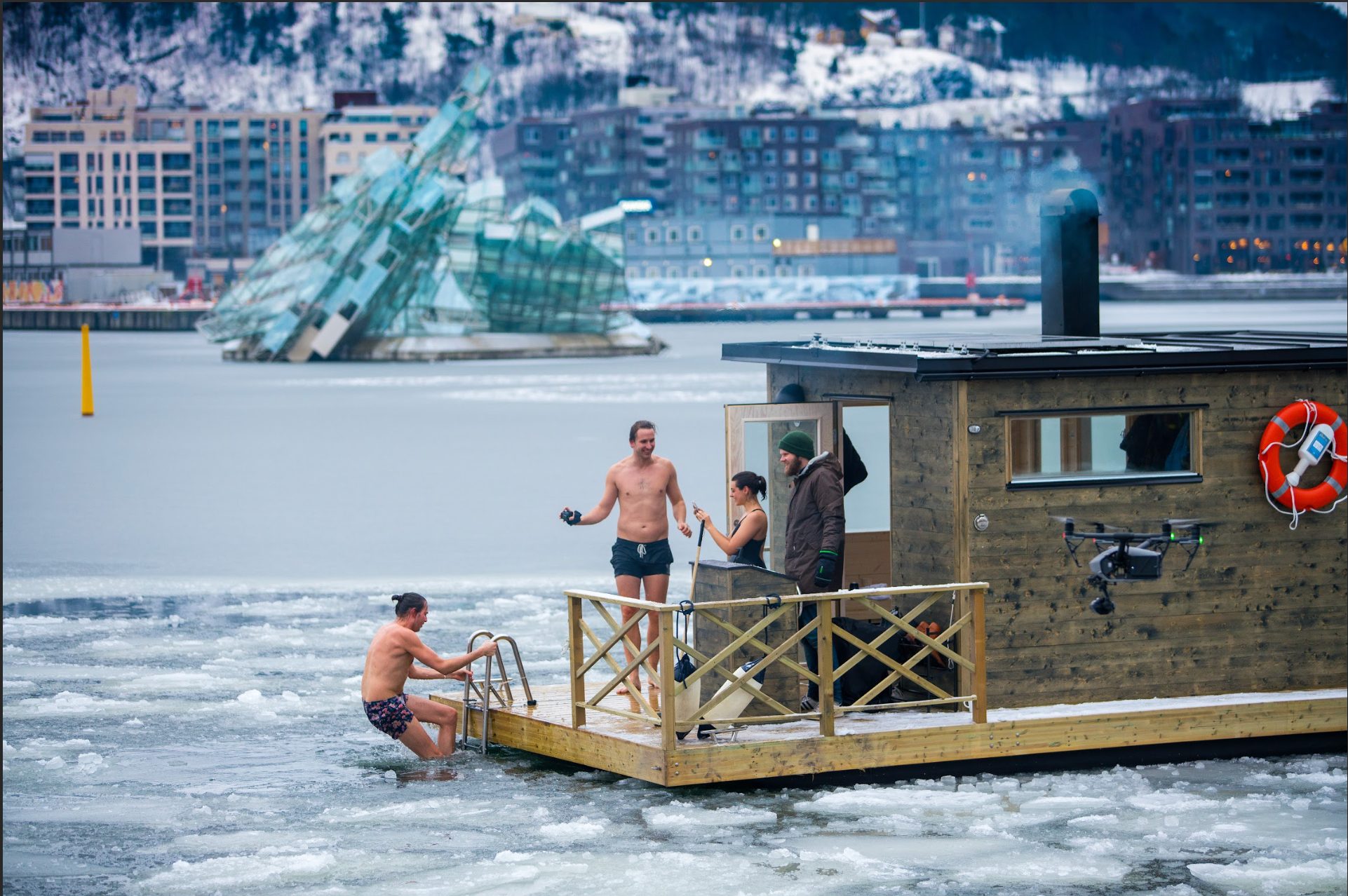
Last year, the non-profit association Oslo Badstuforening recorded 260,000 visits across its 25 saunas, attracting both loyal members and first-timers wanting to enjoy the rituals with the added benefit of a fjord swim.
“I always thought of them as this really fancy thing. Then I was surprised to learn how much of an ‘everyday thing’ they seemed to be,” says Lorena Carmona, 31, from Spain.
“The first time I tried a sauna was after a workout at my gym. I went with one of my classmates. It was horrible—it was too hot for me and felt overwhelming.
"I didn’t try again until a friend convinced me to go to one of the saunas in front of the Opera House. This was about eight years ago and there weren’t as many as there are now, so I was skeptical but curious.
"And that changed everything. I learned from my original mistakes and started to enjoy it. Now I go quite regularly!”
For Lorena, one of the best things is alternating between the heat of the sauna and the cold water of the fjord. “I know it might be intimidating, but your body will feel so good afterwards. If you’re too nervous to go alone, there are groups you can join.
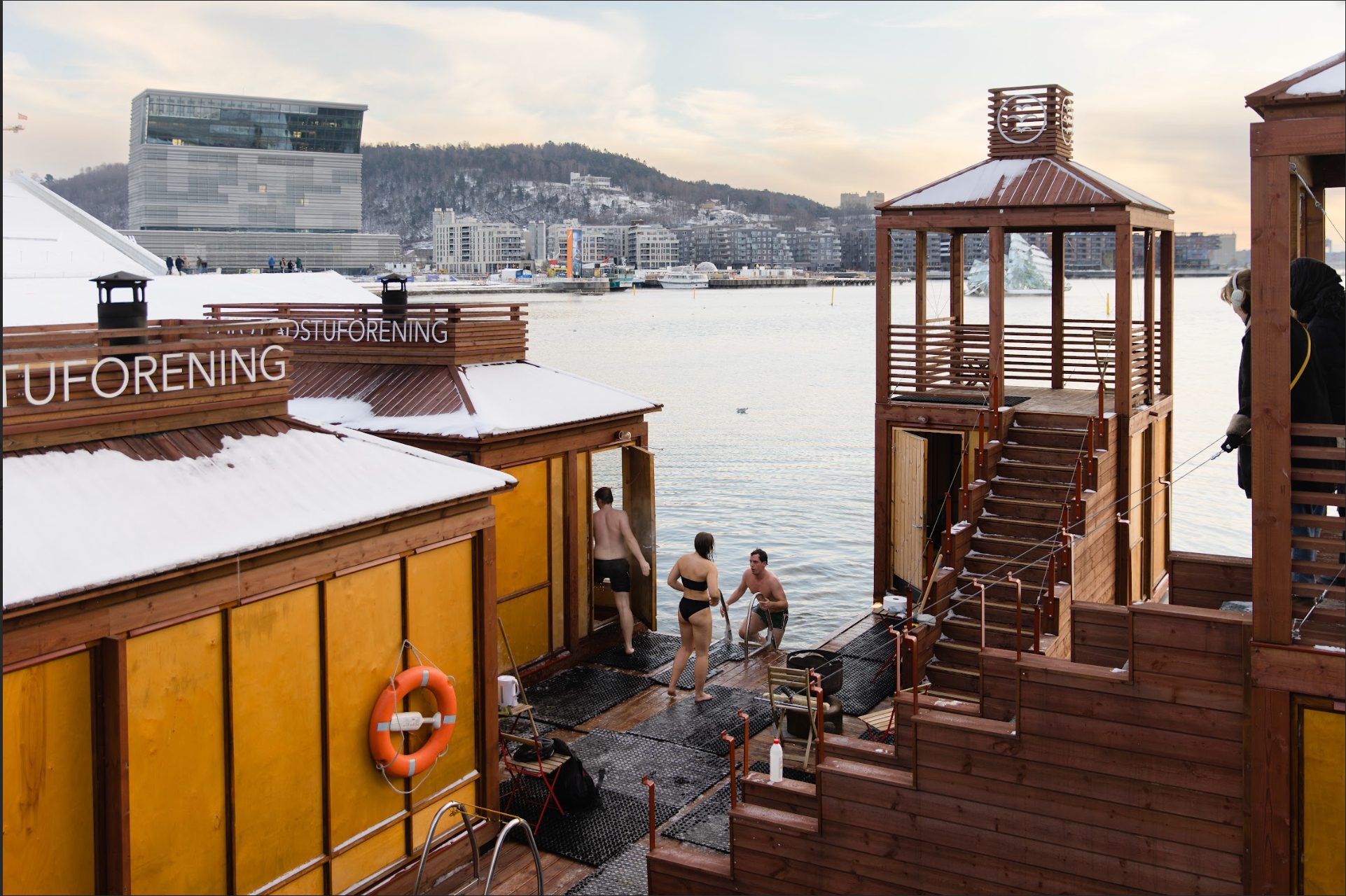
"For example, Queer Sauna Sessions hosts a monthly event and offers a safe space for queer people to enjoy the sauna experience together,” she adds.
“I’ve been to other places around the world that have more of a spa approach to saunas. In Norway, saunas are a casual part of your wellness routine or a fun social plan with friends. It’s accessible and feels welcoming,” says Stephanie Alvarez, 33, from the US.
“My main tips are to bring water and stay hydrated, and practice breathing exercises both in the sauna and in the cold water. Once your body adapts, it’s worth it—and going regularly really makes long winters in Norway much cosier, " she said.
Up for the social part
The heat-and-cold routine isn’t the only reason people say yes to the sauna.
“Personally, it is invigorating for some moments. The extended time in heat is not something actually enjoyable,” admits Ali, 43, from Bahrain. His first time at a floating sauna was during a company trip shortly after he started a new job.
“It was nice and social, and there was lots of alcohol. I’ve been to saunas before but was never really a fan. It was more a ‘let’s try and see’ anyway.”
Once there, he explains, it was fine: “I guess what is challenging is just the initial will to do it. Just try it—it’s very good for your cells. It’s not really a big deal unless you have issues like self-image, fear of water, can’t swim, or a medical condition. The endorphins were pretty nice if I’m being honest. But for me, it was more about the social aspect.”
Oslo urban hype
The story of the harbour sauna villages in Oslo begins with one small, anarchist-built floating sauna made of driftwood from the fjord. Måken, built in 2013, is still one of the most popular saunas. Today you can find many formats, sizes, and experiences—from shared saunas to private bookings (popular for companies, birthdays, bachelorette parties, etc.).
A ticket to a shared sauna costs 260 NOK at Oslobadstuforening (150 NOK for members), 320 NOK at KOK sauna rafts, and 205 NOK at SALT. Tickets are valid for between 1.5 and 2.5 hours, depending on the place.
Plan your first fjord sauna
Here are the best tips from our interviews and sauna guidelines:
Bring:
Swimwear (wear it under your clothes when you arrive to save time changing). Unlike other saunas, Oslo's floating ones don't allow you to get naked.
Two towels: one to sit on in the sauna, and one for swimming.
A water bottle.
In winter: something for your feet, such as wool socks or sandals. Mittens and a hat are also recommended. Bring warm, dry clothes for after your sauna session.
Avoid:
Jewellery, mobile phones, and glasses, which get hot in the sauna and can damage your skin. They’re also easy to forget, so leave them at home or store them safely.
Light rain does not affect bathing water quality, but in the event of heavy rainfall, Oslo Municipality recommends waiting 24 hours before bathing. If you still choose to bathe, they recommend showering afterwards and keeping your head above water.
Other tips:
Alcohol is not allowed in shared saunas. In private bookings, moderate amounts are permitted (maximum two units per person).
Go with a friend or someone who has been before to guide you through the experience.
If it’s your first time, sit on the lowest bench where the heat is less intense. You can move up gradually.
There is no age limit, but children must be accompanied by an adult and should know how to swim. Pregnant women are allowed but should check with their doctor first.
And last but not least—remember to breathe! If you feel uncomfortable, dizzy, or sleepy, leave the sauna immediately.
Comments (1)