
From food and package delivery to cleaners, freelancer designers, babysitters, and even IT consultants — more are more people in Norway are now earning their living through app platforms.
But new research shows that most of these "jobs" via app platforms like Uber, Foodora and Bolt end up being badly paid, with wages controlled by algorithms and come with little protection or benefits and very long hours. For the most part they are filled by foreign workers.
The rise of Norway’s new 'underclass'
Two recent reports from the Institute for Labour and Social Research (Fafo) reveal that app platform workers make up a large part of what is being described as Norway’s “new underclass.”
Many were attracted by the promise of freedom: work when you want, be your own boss, and earn as much as you like.
Kaja Reegård a research manager at Fafo told Norwegian media NRK: "I would almost call this group an underclass. They live outside the society that most of us know.
"There is great distress and desperation among several of those we speak to," she said.
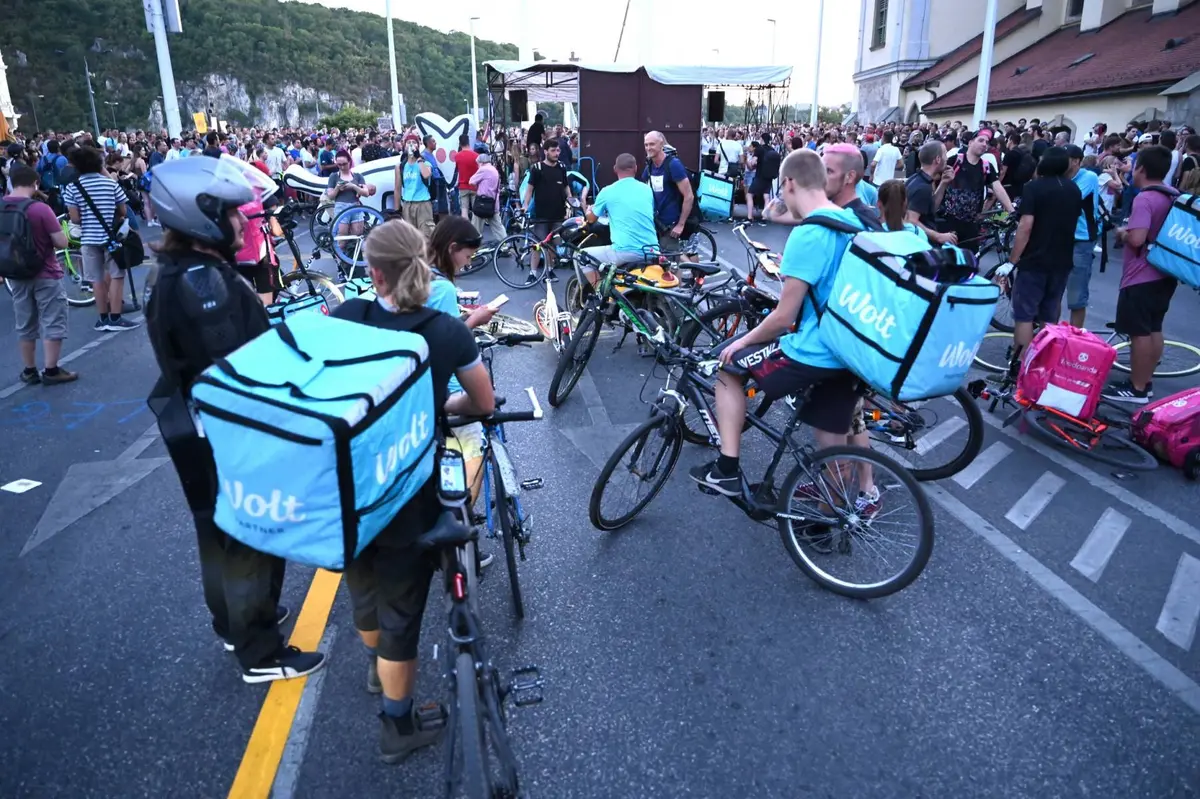
But instead, those who earn their living via the app platforms end up working long hours — often across several apps such as Wolt, Foodora, or Bolt. Almost half of self-employed delivery workers in Norway earn less than 220,000 kroner a year, far below the average for other self-employed groups.
Delivery workers and cleaners — two industries heavily dominated by app platforms — are among the poorest in Norway, with incomes up to 40 percent lower than most wage earners, the new research reveal.
Immigrants hit hardest
Statistics Norway (SSB) has found that around 75 percent of food delivery workers were not born in Norway. In addition, many lack professional networks and face barriers to entering more traditional employment.
Because the entry requirements are low — often workers just need to have a bike or car, a smartphone, and valid residence papers — work via these platforms becomes one of the few options for foreigners.
For many new arrivals in Norway, it serves as a first step into the labor market.
But this first step can quickly become a trap, because many workers simply end up stuck in these low-paid, unstable jobs with little protection or work benefits like those in full time contracts.
Working conditions are also demanding: shifts can be long and arduous, pay depends on demand, and workers carry most of the risk — from maintaining their own bikes and cars to covering sick days and insurance.
Politicians demand action
Norway currently has 71 active app platforms that employ workers — 20 more than in 2017 — and the trend shows no sign of slowing down.
“This is shocking and upsetting to see. A certain type of business has spent years undermining the Norwegian labour model to provide a good working life and a liveable wage,” Socialist Left SV’s Sunniva Holmås Eidsvoll, who heads the party’s group in the city government, said according to NRK.
“We have got to a point where Bolt, Foodora, Uber and other platforms are destroying Norwegian working lives. It’s unacceptable,” she said.
The party said it wants a ban on the hiring of temporary or agency workers in the sector, similar to rules introduced in the construction sector in Oslo.
Norwegian Minister of Labour and Social Inclusion Tonje Brenna (Labour Party) told Norwegian broadcaster NRK that policymakers must keep a close eye on how this new labor model develops:
“We must pay close attention to these ways of organizing work. And we must constantly be concerned that the legislation we have is followed.”
Comments