
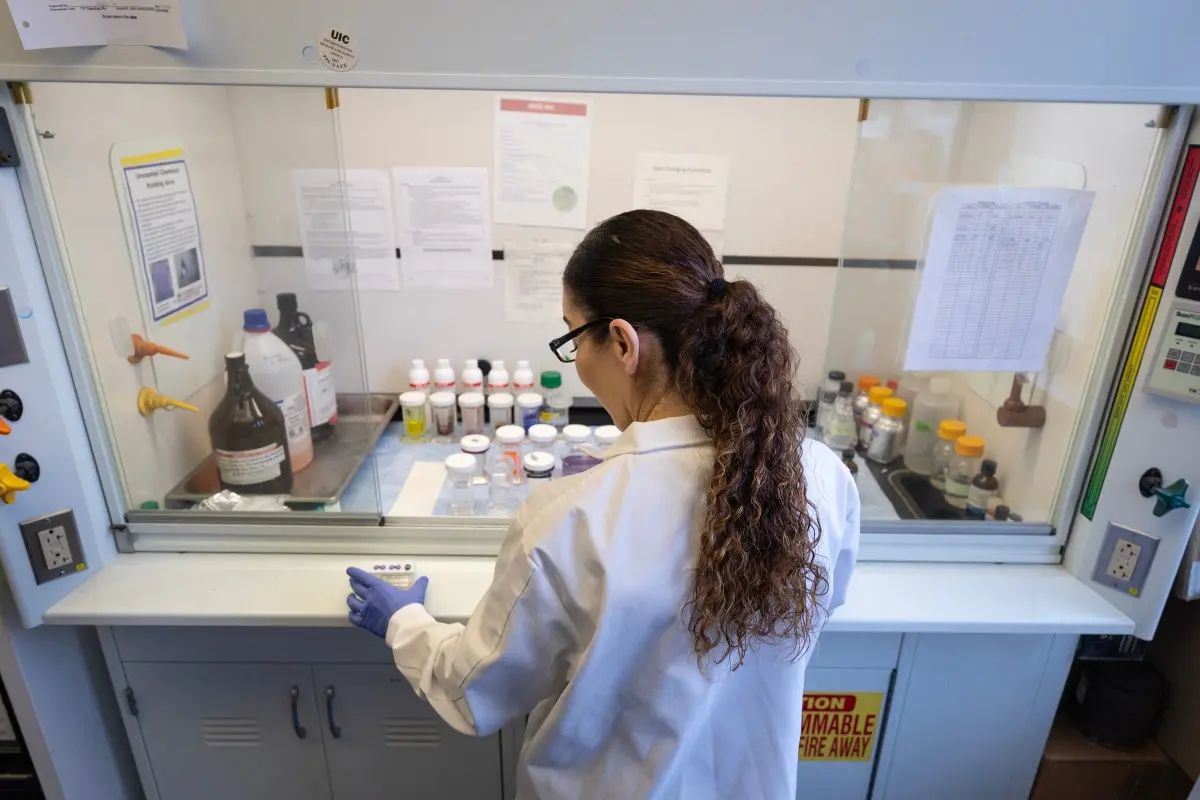
The Research Council of Norway announced last week a 100-million-kroner (about $10-million) scheme to attract top international researchers.
"Academic freedom is under pressure in the United States, and it is an unpredictable situation for many researchers in what has been the world's leading research nation for many decades," Norway's higher education minister, Sigrun Aasland, said in a statement. "It is important for Norway to be proactive in a demanding situation for academic freedom."
But what is the situation for academics in Norway and would they recommend their colleagues from the US or other countries to join them?
The Local asked them about the attractions of researching at a Norwegian university and what the country could do to make the country even more attractive.
Did they recommend researching in Norway?
Mainly, yes! The big draw for many of the 30 researchers who answered our inquiry was the salary PhD students receive, which Han, from China, said was "higher than in other EU countries," and Gitika Gupta, from India, described as "excellent".
The better funding didn't stop there. One Bangladeshi researcher, who preferred to remain anonymous, said there was also a "generous amount of funding for data collection, conferences, and exchange programs".
A Korean postdoctoral researcher, who also wanted to remain anonymous, said it was unusual how much funding there was for travel to international conferences.
Others praised the work-life balance, the relatively low workplace stress and bureaucracy, and the high level of academic freedom.
"The freedom to pursue my own interests as a researcher was an amazing experience and often underestimated," wrote Crystal Turnbull, a South African plant biologist. "We weren’t bound too tightly to our tasks or to strict expectations."
For a social scientist, wrote Sam Dodini, a former postdoctoral fellow in economics at NHH, who is now back in the US, the detailed data Norway has long kept on its citizens was a "treasure trove of information".
What are the drawbacks?
It wasn't all rosy. Foreign researchers reported that while PhD positions were well-paid, the prospects for foreign post-doctoral researchers were less-good, with a shortage of permanent jobs leaving many foreigners stuck in a succession of temporary and part-time positions.
In addition, many complained of discrimination in favour of Norwegian nationals when it came to permanent jobs, with publicly advertised jobs often appearing to be tailor-made in advance for a particular candidate.
"It is very difficult to get permanent positions even for us who got educated in Norway and can speak Norwegian fluently," the Korean researcher complained. "In my experience, many of the few permanent positions are kind of set-up positions and the internal applicants get the position no matter their ability, skill and experience. This is not fair!"
"Frankly, Norwegians get it much easier here. They are (very often) favored just because they are Norwegian," a female researcher from another Nordic country agreed.
Those foreigners who had achieved the level of professor complained that the salaries at this level were "not especially good", with two calling for academic salaries to be increased.
The academic freedom researchers in Norway enjoyed also came at the cost of mediocrity, said one US researcher, who is soon to return home despite the current onslaught on US universities.
"It is nothing like the US," he grumbled. "There is a really good reason their university rankings are so low."
So, what could Norway do to be more attractive?
Remove Norwegian tuition requirements
A repeated call was for the country to stop imposing such strict Norwegian language requirements on foreign researchers, with several respondents mentioning a new rule which came into force last August requiring all doctoral and postdoctoral researchers who do not speak Norwegian, Danish or Swedish to complete 15 study points of Norwegian language training.
"Internationally relevant research is not conducted in Norwegian, and putting so many (increasing) regulations on language proficiency disincentivizes people from coming and cuts down on their productivity if they do come," argued Robert Gray, associate professor of university pedagogy at the University of Bergen.
"It takes time to focus on language and research/teaching at the same time," complained Mallikarjuna Rao Kovi, a full time research scientist at the Norwegian University of Life Sciences (NMBU).
Other researchers, however, said they would welcome more support in learning Norwegian.
Better welcome programmes
"Norway is notoriously difficult to assimilate into, especially for families and 'trailing spouses', Dodini said, arguing there needed to be "better support for the institutional process of onboarding (e.g. getting a birth number, BankID), explaining specific practices (like holiday pay, wage bargaining processes), and [introductions to] the medical and schooling systems."
Many respondents complained about difficulties making friends and meeting Norwegians outside work.
"It's very hard almost for everyone to build a private life or make any friends," complained Anna. "Some nationalities are more welcome than others."
"It would be nice also to be invited somewhere outside work," echoed the researcher from another Nordic country. "It is not the local culture. Foreigners are often quite alone and among themselves."
The Bangladeshi researcher said there needed to be "some integration program" for researchers' families. "Moving to a new country as a researcher is very difficult if you have a working spouse and kids."
Broaden funding sources
Turnbull argued that Norwegian researchers were overreliant on funding from the Research Council of Norway, which tended to "politically influenced".
"They could stimulate initiatives to invest in research by companies," she argued. "A private company could be interested in other research but it can be very expensive for them to invest in research."
She also called for more investment in early career researchers. "They are the ones with the energy, the drive but also the least supported! There are too few calls for small startup projects."
The US researcher said that Norway should both increase funding from the research council and also "provide better admin support for grant writing at universities".
More permanent positions for foreign researchers
The Nordic researcher said Norway should "establish more permanent job possibilities".
Marie, a former scientist in a biotech company in Oslo, said that Norway needed "more investments in companies and universities so there are actually more jobs to go around".
"Opportunities are so limited, they are almost non existent," she complained. "Also many workplaces require us to speak Norwegian fluently, so this will not attract foreigners, plus the mentality towards recruitment needs to change (not relying only on hiring someone you know from someone who knows someone)."
Do more internationally oriented research
One researcher, who preferred to remain anonymous, said one change that would attract international researchers would be a "stronger emphasis on cutting edge, internationally leading, research, as opposed to just locally relevant applied work".
The US researcher said that Norway should "improve or set-up technology transfer offices" to help researchers commercialise their discoveries.
Reform tax system
The US researcher said that many of his counterparts would be deterred by the double taxation risks.
Norway, he said, should "recognise the tax deferred status of US pensions like IRAs and 401k and fix holes that lead to double taxation".
"If Norway is looking to attract high-level people with top jobs that pay well, the international wealth tax and the exit tax are really preventing [the country] from attracting these talents," Marie said.
Comments