
US President Donald Trump is expected to announce the tariffs, which will take effect immediately at around 10pm Norwegian time on Wednesday.
“We must be prepared for the fact that today will be the most massive tariff increase the world has seen in many decades,” Minister of Finance Jens Stoltenberg said regarding the tariffs to public broadcaster NRK on Wednesday.
Stoltenberg said that Norway was one of the countries that benefitted the most from free trade between countries.
“If there is now a tariff war and tariff walls, it will affect Norway more than many other countries,” Stoltenberg said.
The Norwegian Confederation of Enterprise (NHO), the country’s largest employer organisation, said it is worried about the prospect of a flat tariff that would affect all countries being introduced.
“We are a bit on edge about what is to come,” Ole Erik Almlid, CEO of the NHO, told NRK.
“One can imagine they will impose a flat tariff on all countries. Then Norway will be hit hard, and Norwegian businesses will be hit very hard,” he added.
Tariffs are taxes and charges on imported products. These taxes and charges make imported products more expensive for importers and consumers, and tariffs are used to protect domestic products.
For example, Norway has several tariffs in place, such as 344 percent on beef and 443 on milk, to protect Norwegian agriculture.
READ ALSO: What are Norway's food tariffs, and how do they affect grocery prices?
US President Donald Trump has imposed or announced tariffs against several countries in a bid to try to balance the US’s trade balance with other countries.
However, this has also raised the possibility of other countries, or trading blocs like the EU, imposing counter-tariffs. Norway’s trade minister has previously ruled out Norway introducing a counter-tariff against the US.
Some 600,000 jobs in Norway are linked to exports, which is why a protracted trade war could harm Norway.
“We have lived off exports for many years. When you have a big difference from day one to day two with you suddenly having to pay customs duties on goods going into the US, it will mean a lot to many people,” Almlid said.
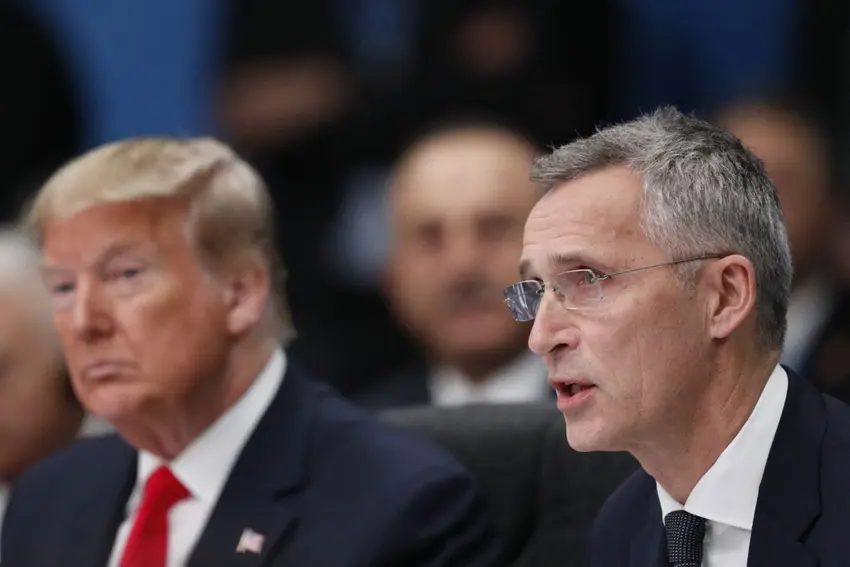
Trump has referred to the introduction of the tariffs as “Liberation Day”, something Stoltenberg, who built up a rapport with the US President during his term as Nato chief, disagrees with.
“I would call it a day when the world takes a step in the wrong direction,” he said.
Stoltenberg said the government had taken three measures to avoid being hit by a triple whammy of a downturn in the economy, being subject to US tariffs, and then being hit with EU counter-tariffs.
These measures were sticking to the EEA Agreement, having ongoing discussions with decision-makers in the European Commission, and working to ensure the Norwegian economy remained healthy.
Despite being an EEA member, Norway has worked to ensure it would not be affected by EU counter-tariffs. This is because it is not a member of the customs union that would automatically exempt it from tariffs.
Comments