
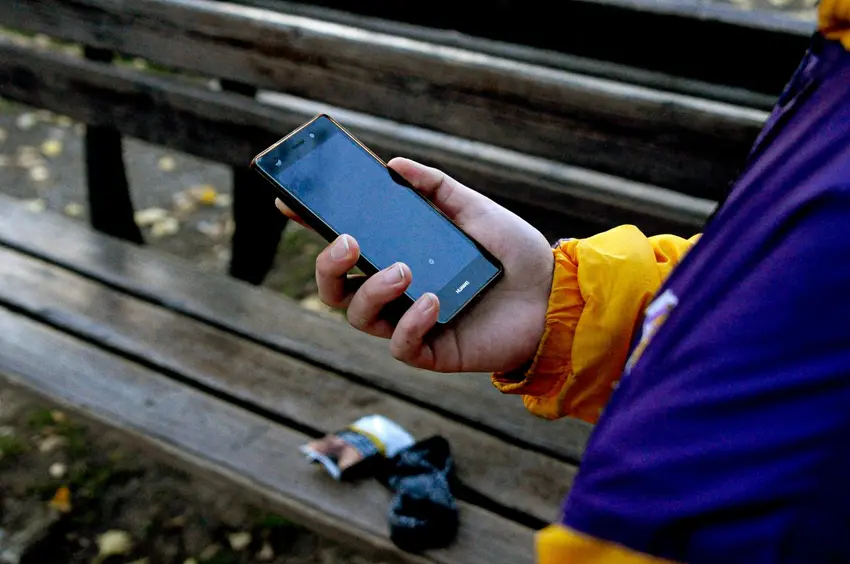
The governments of Nordic countries are increasingly waking up to the risks of high screen use among children.
"We are deeply concerned about the harmful effects on [children's] health and wellbeing of spending more time on screens," the health ministers of the five countries said in a joint statement after a meeting of the Nordic Council of Ministers in April 2024.
They pledged to do more at a Nordic level "to address how screen time affects the health and wellbeing of children and young people", setting up a joint working group aimed at reducing the damage, and vowing to "increase the pressure on tech companies to assume responsibility and take measures to minimise the negative effects their products have on children and young people".
But each country is also acting to limit screen use at school and in the home at a national level.
Here are the current laws, regulations and recommendations.
IN SCHOOLS:
Denmark: Denmark's education minister announced on February 24th, 2025 that the government would push through a law this year banning smartphones and tablets in schools, both in lessons and during break times.
In February 2024, the Board of Education and Quality (STUK) at the education ministry, issued new screen-use recommendations to schools, which recommended that school management boards consider turning their school "mobile phone-free", blocking access to non-relevant websites, and calling on students to put their tablets or computers away when not using them in class.
Copenhagen Municipality in 2024 blocked social media platforms from school computers and wifi networks.
Many school boards in Denmark have already opted to make their schools "screen free".
Sweden: Sweden's education minister Johan Pehrson has made the move från skärm till pärm, or "from screens to folders", one of the main themes of his tenure.
He has not so far pushed through a school smartphone ban like Denmark's, but a government inquiry launched in September is on March 3rd set to propose how this might be done. This will be followed by a consultation and then a parliamentary bill leading to a national ban, perhaps at the start of 2026.
Many schools in Sweden have, however, already brought in screen bans, with mobile phones collected by teachers at the beginning of the school day and returned to pupils when they go home.
The government has also ordered the Swedish National Agency for Education to assess the use of computers, apps and other devices in teaching, and develop advice for teachers and schools on how to reduce the use of screens in teaching. The agency is due to deliver its recommendations on April 30th this year.
The government on February 27th also decided to change the curriculum for children in day care so that Swedish kindergartens are completely screen-free for children of two years old and under, with minimal screen use for kindergarten students over this age.
Norway
The Norwegian Directorate of Education in February 2024 issued new recommendations calling for mobile phone-free classrooms and break times at primary and secondary schools. A year later, they reported that 96 percent of primary schools and 64 percent of upper secondary schools had brought in bans.
The city government of Stavanger was a trailblazer here, turning all of its schools mobile-phone free back in 2019.
AT HOME
Sweden:
Sweden's public health agency issued new advice on children's screen use at home last September, recommending that children should not use screens at all before the age of two years' old, should have no more than two hours a day between the ages of 2 and 12, and no more than three hours a day for children between the ages of 13 and 18.
Norway:
Norway was a trailblazer, issuing recommendations in 2022 that children under the age of two years old should not be given screens.
The Norwegian Directorate of Health now recommends that screen use should be limited to one hour a day for children between 2 and 5, and that passive screen time should be "limited" for children between the ages of 6 and 17.
Norway's health directorate has told The Local that it will publish updated recommendations during the first half of 2025.
Denmark:
The Danish Health Authority's latest advice, from August 2024, recommends a maximum of one hour's screen time a day for children between the ages of two and four, a maximum of two hours' screen time a day for children between the ages of five and 17, and a maximum of three hours' screen time a day for adults.
The Danish government's Trivselskommission or “Well-being Commission", recommended in February that no child in Denmark should have their own smartphone before the age of 13.
Comments