
If you have ever participated in a May 17th parade in Norway, you understand that celebrations on the country's national day are a huge deal.
However, if you're yet to experience this festive explosion of cheer, happiness, optimism, and patriotism in Norway, you're in for a treat, especially if you move to or visit one of the country's bigger cities (such as Oslo or Bergen).
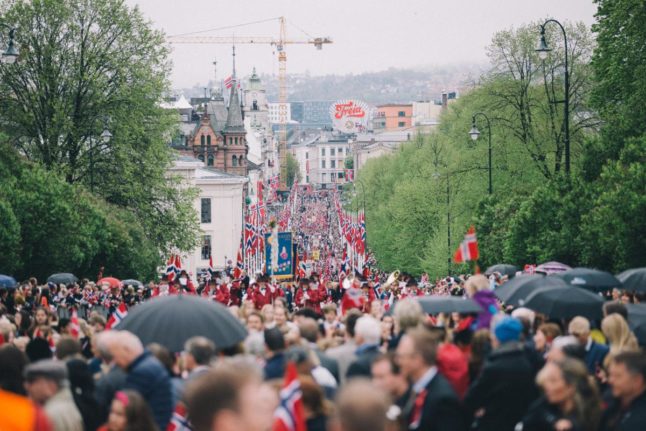
On May 17th, huge parades take over the streets, headed by marching bands that lead celebratory processions through Norway's towns and communities.
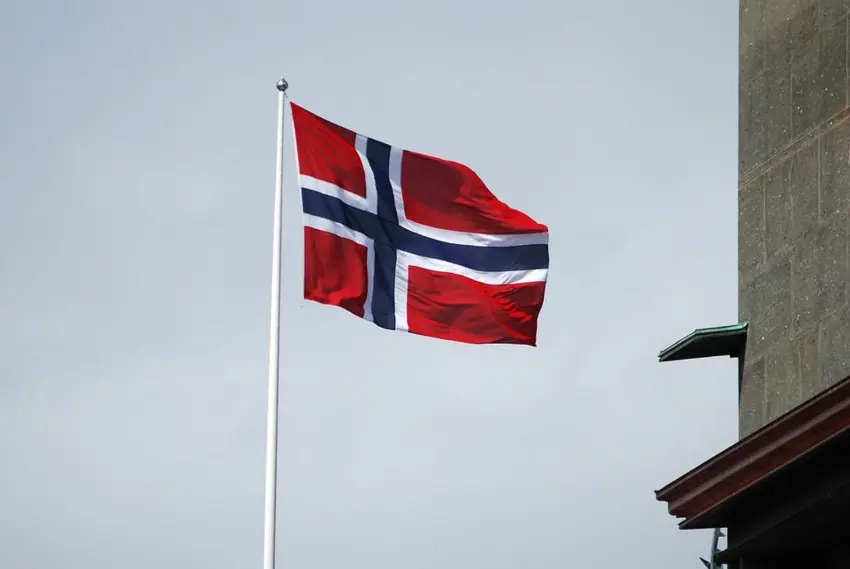
Thousands of individuals gather at the biggest parades, enthusiastically waving Norwegian flags, which can be seen on most windows or balconies (even the parks are decorated with flowers in the colour of Norway's flag).
So, that's what the festivities on May 17th traditionally look like in Norway.
However, if you're wondering why this date is celebrated in the country, don't worry - we've got you covered.
May 17th: The history behind the day
Norwegians celebrate May 17th to observe the passing of their constitution, which was adopted by the Constituent Assembly at Eidsvoll on May 16th, 1814 and signed the following day.
Norway has the second-oldest written constitution in the world still in existence.
Once the constitution - founded on the principles of the sovereignty of the people, the separation of powers, and human rights - was passed in 1814, the Norwegian people started to celebrate the historic event.
However, as Norway was part of a union with its neighbour, Sweden, at the time, King Karl Johan of Sweden and Norway banned such celebrations from 1820 to 1829.
In fact, a crack down on celebrations in 1829 led to the Battle of the Square. This skirmish between demonstrators and a mix of police and military eventually led to the prohibition on May 17th celebrations being lifted.
Things changed in 1833 when Norwegian poet Henrik Wergeland held a public speech to commemorate the day. Since that year, May 17th has been marked as the country's national day.
After the passing of King Karl Johan in 1844, the day began to be commemorated with unrestricted celebrations.
Some three decades later, thanks to the efforts of Bjørnstjerne Bjørnson (the author of the Norwegian anthem) and other supporters of the cause, the first May 17th children's parade took place in Christiania, which would later get a new name, Oslo.
While May 17th celebrations primarily centred around the Norwegian constitution up to the 20th century, following 1905, the focus extended to include the royal family.
During World War II, the day was not publicly celebrated due to the German occupation.
A day filled with traditions
May 17th celebrations often involve traditions that go back more than 100 years. One of these is also celebrating the day in a bunad, Norway's traditional folk costume.
As a generally used term, the word bunad encompasses a wide range of traditional Norwegian rural garments, primarily dating back to the 19th and 18th centuries, as well as more modern 20th-century folk costumes.
Norwegians wear their bunads for important events (May 17th, weddings, and confirmations are the perfect occasion for showing off your traditional attire), and there are significant differences in bunad styles and colours depending on the region one comes from.
For the uninitiated, know that bunads can be quite expensive. Usually handmade and accompanied by a steady stream of increasingly precious jewellery (which Norwegians tend to get for birthdays, confirmation, and other special life events), these costumes can often go for several tens of thousands of kroner.
Without going into the technical details, we'll just note that there are also other festive costumes that tend to be worn for special occasions in Norway (festdrakt), which are less bound by traditional requirements and can be found at significantly lower prices.
In any case, May 17th is usually the day in the year when you'll see the biggest number of people in the street proudly wearing traditional Norwegian costumes, which gives the occasion an additional air of elegance and tradition.
Another tradition that generations of Norwegians have carried on is the musical aspect of May 17th parades and parties, which often involve marching bands, choirs, and orchestras.
READ MORE: Key things you absolutely shouldn't do on May 17th in Norway
The children's parade in Oslo, which sees school children in Oslo march up Karl Johan Street to the palace to see the royal family sat on their balcony, is perhaps the highlight of the day for many. Even if you aren't in Oslo, you'll be able to tune into the parade on public broadcaster NRK.
During the festivities, you'll likely get to hear national and patriotic songs and melodies like Norge i rødt, hvitt og blått (Norway in Red, White and Blue), Ja, vi elsker dette landet (Yes, We Love this Country), Syttende mai er jeg så glad i, and many others!
Throughout the years, the celebrations on May 17th have developed into a more comprehensive commemoration of Norwegian national identity, unity, and cultural heritage. Today, this day holds great significance for Norwegians and is widely seen as a day of special pride and cheer.
You can find out more about the Norwegian constitution on the webpage of the Norwegian parliament.
Comments