Wartime leader 'hated' Sweden for Nazi help

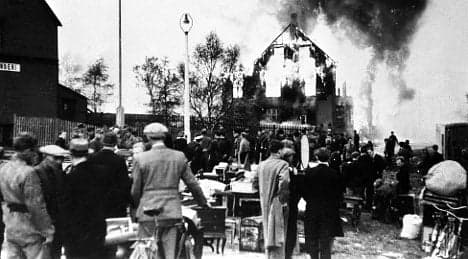
As Norwegian fighters battled the Nazis in Narvik, Sweden let Hitler’s army use its rail network to transport much larger numbers of troops than previously realized to the strategically important port, a new book reveals.
Narvik-based journalist Espen Eidum spent three years combing through the Norwegian, Swedish and German archives in his bid to discover how the Nazis had managed to get troops and supplies to the front lines in Narvik in 1940, enabling them to turn a losing battle into a decisive victory.
The results of his research proved damning for Norway's nominally neutral neighbour.
“The Germans used the Swedish rail network on a large scale during the fighting,” Eidum told newspaper Dagbladet following the release of his book Blodsporet, ‘The Blood Track’.
“The operation was much more extensive than historians have previously realized,” he added.
In his book, Eidum documents how the Swedish authorities in October 1940 -- four months after the German victory – sought to convince Norwegian delegates in London and Stockholm that Sweden had not allowed the Nazis to transport soldiers and weapons through its territory. The truth, however, was very different, Eidum found.
According to the book, the German foreign ministry had earlier summoned the Swedish ambassador in Berlin to inform him that Adolf Hitler had personally requested for the Nazis to be permitted to send three trains with 30 to 40 sealed carriages through Sweden to the far north of Norway.
Hitler’s representatives told the Swedes that the Germans had a number of wounded soldiers at the front and urgently needed to send in medical officers and food. The Germans also made no secret of the fact that winning the battle in Narvik was a matter of some pride for the Nazi leader.
Once Sweden gave the go-ahead, however, the Germans took the opportunity to send combat soldiers, disguised as medical staff, to the Narvik front. For every actual medical officer, the trains carried 17 ground troops, according to Eidum’s calculations.
A report sent by a Swedish representative in Berlin, who watched the officers board the train, left little doubt that the Swedes knew the trains were being used for troop movements. What’s more, Eidum’s research indicates that the trains were also loaded with heavy artillery, anti-aircraft guns, ammunition, engineering equipment, communications equipment and clothing.
Once Norway had lost Narvik, the Swedes then paved the way for the Nazis to continue sending trains to the occupied port town, a crucial hub for the transportation of iron ore.
From 1940 to August 1943, German trains rolled across Sweden’s northernmost borders before moving on to Oslo, Trondheim and Narvik. Norwegian prisoners were also sent by train to concentration camps in Germany when the rail cooperation was at its highest ebb, the book claims.
In what Eidum says was a particularly lucrative three-year period for Swedish rail operator SJ, hundreds of thousands of Nazi soldiers were allowed to pass through Sweden as they made their way to the Eastern Front in the USSR.
Eidum also includes in his book a venomous letter from Norway’s wartime prime minister, Johan Nygaardsvold (Labour Party), sent on New Year’s Eve 1940 to his Stockholm-based party colleague Anders Frihagen.
Seething with rage, Nygaardsvold asked his government’s Stockholm representative to convey his anger to the Swedish prime minister, Per Albin Hansson (Social Democrat).
“If YOU can arrange a private conversation with Per Albin Hansson you can give him my greetings and tell him there are two things I want to experience, and those are: that the Germans get hunted out of Norway and, secondly, that I get to live long enough to give him and his entire government a proper dressing down – maybe even his entire party.”
Nygaardsvold further noted that there “is nothing, nothing, nothing I hate with such passion and wild abandon as Sweden – and it is his (Hansson’s) fault.”
The recipient of the letter never showed it to the Swedish prime minister.
Comments
See Also
Narvik-based journalist Espen Eidum spent three years combing through the Norwegian, Swedish and German archives in his bid to discover how the Nazis had managed to get troops and supplies to the front lines in Narvik in 1940, enabling them to turn a losing battle into a decisive victory.
The results of his research proved damning for Norway's nominally neutral neighbour.
“The Germans used the Swedish rail network on a large scale during the fighting,” Eidum told newspaper Dagbladet following the release of his book Blodsporet, ‘The Blood Track’.
“The operation was much more extensive than historians have previously realized,” he added.
In his book, Eidum documents how the Swedish authorities in October 1940 -- four months after the German victory – sought to convince Norwegian delegates in London and Stockholm that Sweden had not allowed the Nazis to transport soldiers and weapons through its territory. The truth, however, was very different, Eidum found.
According to the book, the German foreign ministry had earlier summoned the Swedish ambassador in Berlin to inform him that Adolf Hitler had personally requested for the Nazis to be permitted to send three trains with 30 to 40 sealed carriages through Sweden to the far north of Norway.
Hitler’s representatives told the Swedes that the Germans had a number of wounded soldiers at the front and urgently needed to send in medical officers and food. The Germans also made no secret of the fact that winning the battle in Narvik was a matter of some pride for the Nazi leader.
Once Sweden gave the go-ahead, however, the Germans took the opportunity to send combat soldiers, disguised as medical staff, to the Narvik front. For every actual medical officer, the trains carried 17 ground troops, according to Eidum’s calculations.
A report sent by a Swedish representative in Berlin, who watched the officers board the train, left little doubt that the Swedes knew the trains were being used for troop movements. What’s more, Eidum’s research indicates that the trains were also loaded with heavy artillery, anti-aircraft guns, ammunition, engineering equipment, communications equipment and clothing.
Once Norway had lost Narvik, the Swedes then paved the way for the Nazis to continue sending trains to the occupied port town, a crucial hub for the transportation of iron ore.
From 1940 to August 1943, German trains rolled across Sweden’s northernmost borders before moving on to Oslo, Trondheim and Narvik. Norwegian prisoners were also sent by train to concentration camps in Germany when the rail cooperation was at its highest ebb, the book claims.
In what Eidum says was a particularly lucrative three-year period for Swedish rail operator SJ, hundreds of thousands of Nazi soldiers were allowed to pass through Sweden as they made their way to the Eastern Front in the USSR.
Eidum also includes in his book a venomous letter from Norway’s wartime prime minister, Johan Nygaardsvold (Labour Party), sent on New Year’s Eve 1940 to his Stockholm-based party colleague Anders Frihagen.
Seething with rage, Nygaardsvold asked his government’s Stockholm representative to convey his anger to the Swedish prime minister, Per Albin Hansson (Social Democrat).
“If YOU can arrange a private conversation with Per Albin Hansson you can give him my greetings and tell him there are two things I want to experience, and those are: that the Germans get hunted out of Norway and, secondly, that I get to live long enough to give him and his entire government a proper dressing down – maybe even his entire party.”
Nygaardsvold further noted that there “is nothing, nothing, nothing I hate with such passion and wild abandon as Sweden – and it is his (Hansson’s) fault.”
The recipient of the letter never showed it to the Swedish prime minister.
Join the conversation in our comments section below. Share your own views and experience and if you have a question or suggestion for our journalists then email us at [email protected].
Please keep comments civil, constructive and on topic – and make sure to read our terms of use before getting involved.
Please log in here to leave a comment.